

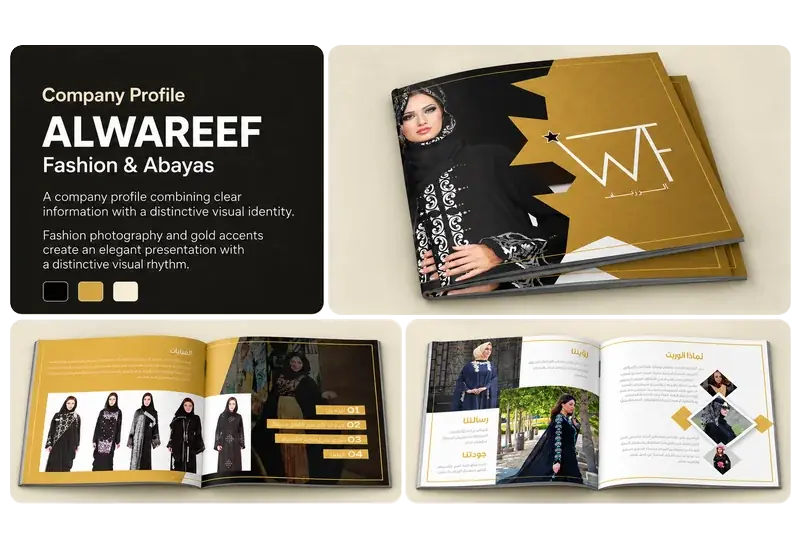
Brand Identity and Company Profile: What to Prepare First
A new logo and a new company profile are often commissioned as separate jobs. The logo is finished first, then someone tries to make a document look consistent with it. That approach can lead to missing fonts, unclear colour choices and repeated layout work. Planning your brand identity and company profile together gives both projects a shared foundation: the same company facts, visual rules and message about what your business actually does.
Preparing your company’s presentation? Compare our logo and identity packages and company profile design packages to choose the services you need. Send us your requirements if you want to discuss both together.
Understand what each item is meant to do
A logo identifies the business. A brand identity defines how that identity is applied through typography, colours, imagery and layouts. A company profile explains the business to a reader who needs to assess it.
The profile may support a supplier introduction, tender discussion, sales meeting or partnership conversation. It should therefore answer practical questions about your services, capabilities, experience and contact details. An attractive document with vague content does not perform that job well.
This distinction helps you avoid buying the same work twice. It also makes the brief more specific: you can request a visual system, a document structure or both, rather than asking for an undefined “branding package”.
Prepare the company facts before polishing the wording
Start with accurate information that can be checked. Confirm the company name, establishment details, locations, contact information and main services. Decide which information belongs in a public profile and which should remain in a private proposal or supporting document.
For each service, write a short explanation of what the company delivers and who it serves. Replace broad statements such as “we provide complete solutions” with concrete information about the actual work.
Then gather evidence: approved project images, relevant examples, genuine testimonials, certifications that are current and permission to use client names or logos. Do not include an expired certificate or imply that a client endorses your company without approval.
Build the profile around the reader’s questions
A practical company profile structure can begin with:
- A clear introduction to the business and its main activities.
- Its services or product groups, explained in plain language.
- Capabilities that matter to the intended customer.
- Selected projects or examples with useful captions.
- Relevant credentials and team information where appropriate.
- Contact details and a clear next step.
This is a starting point, not a required page count. A specialist business may explain itself well in a short document. A company with several divisions may need more space. Add pages when they help the reader make a decision, not simply to make the profile look larger.
Imagine a contractor preparing a profile for a procurement team. A labelled project image, a precise scope description and relevant capability information may be more useful than several pages of general mission statements. The same contractor’s short introduction for homeowners could use a different emphasis.
Agree the visual rules before the full layout
The designer needs more than a logo pasted into an email. Provide the available logo files, including editable artwork where possible. Confirm the versions suitable for light and dark backgrounds and the colours and fonts approved for use.
A useful identity system also considers headings, body text, spacing, tables, image treatment and simple supporting graphics. These choices can be applied across the profile, website, stationery and presentations without forcing every item to use an identical layout.
Our logo and visual identity service covers the identity side of this work. A project brief should clearly state which guidelines and files are required so the business can apply the identity consistently later.
Plan English and Arabic as part of the layout
If the company profile will be used in both languages, decide that before design begins. Confirm whether you need two separate documents or one bilingual version. The right choice depends on how the profile will be shared and who will read it.
Translation changes text length and reading direction. Arabic may need different line breaks and alignment, while technical names may need an agreed spelling across both versions. Company names, dates, contact details and service descriptions should stay consistent.
Approve the written content in each language before the final layout review. This reduces avoidable revisions and gives the designer a realistic amount of text to work with.
Specify the files you need after delivery
A profile for email and messaging should be easy to open and share. A print version may need separate production settings agreed with the printer. These are different uses, so clarify both rather than assuming one PDF will suit every situation.
Ask what editable files are included, which software is needed to use them and whether any fonts or images have licensing restrictions. Keep an approved master copy and record who is responsible for updating company facts.
The company profile and pitch deck service is the relevant starting point when the main task is organising and presenting company information. Your website and profile can share verified facts while presenting them in formats suited to their readers.
Use one approval checklist for both projects
Before signing off, check names, spelling, phone numbers, links, image captions and the consistency of the logo, fonts and colours. Test the profile on a phone as well as a computer. Check that its contact links work and that the text remains readable at a normal viewing size.
Planning your brand identity and company profile together does not mean doing everything at once. It means making the shared decisions early, then completing each deliverable with a clear purpose. The result is a presentation that is easier to understand, apply and update.